


Maintenance work on our beautiful Freedom Hive
Bracing ourselves for an avalanche of debris, Mick (who looks after the hives on our farm) and I unsealed the observation hatch of our freedom hive with some trepidation last weekend. Having lost our bees to an aggressive wasp invasion over the summer, we had waited for these invaders to exit once they had stolen all the honey.
Our job was to clean the hive up, inspect for any damage and reinstate some propolis to hopefully attract a new swarm of bees.
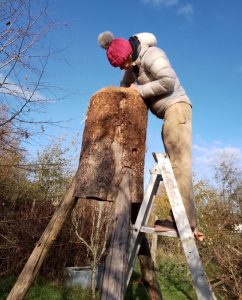
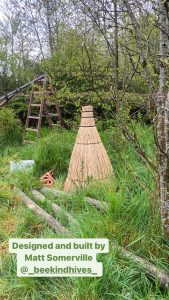
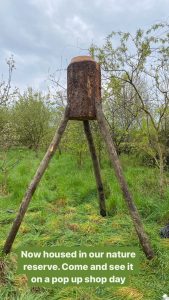
The freedom hive itself is a work of wonder. Created by Matt Somerville, it sits atop legs of seven feet tall, thus allowing you to walk underneath it and the bees in flight. It sports a thatched hat and the body of the hive is a hollowed out tree trunk. We leave the bees alone, just occasionally taking a peek via the observation hatch to wonder at the wild honey comb which can be up to 3 feet in length.

The freedom hive as it was being installed in April 2023


Cleaning the hive in November 2026
The mini mountain of muck that fell out resembled dark brown sawdust or coffee grounds. This is called frass and is the wax moth larvae’s excrement. They’d clearly not been short of food inside the hive.
Looking up inside, the walls were covered with small white cases of papery material. These were the pupae cases of the wax moth. It was satisfying work, scraping the cases and some remaining larvae away. What surprised us was the amount of damage the larvae had done to the wood. They had chewed through the wood to create deep channels in which to anchor their cocoons. Mick advised me that this can structurally destroy Bee hives if left unchecked. The larvae also make short work of honeycomb and beeswax.


Having cleaned up the hive by scraping and brushing, we then rubbed some propolis, or “Bee glue” around the entry holes on the hive. This sticky, amber coloured resin is made when the bees mix their own saliva and beeswax with tree resins. The bees use this themselves to seal and fix this in the hive- hence us having to prise open the observation hatch which had been glued tightly shut.
Their propolis emits a welcoming “used hive” scent to scout bees who are on the look out for safe homes for swarms. Here’s hoping we get new bees and I now have a note to check for the dreaded wax moth next year.
Emx

Make sure you don’t miss out on our product updates, gluten free baking tips, all the news from the bakery, and a monthly discount code for our yummy cakes. Sign up to our newsletter here.
You might also be interested in reading our tips on how to make your garden more nature friendly.


